If you want a Chicago commute without giving up a suburban home base, Glenview deserves a close look. You may be weighing train time, parking, housing options, and whether daily life will feel convenient enough to justify the move. The good news is that Glenview offers a practical mix of rail access, expressway proximity, and established residential areas. Here’s what you should know before deciding if living in Glenview and commuting to downtown Chicago fits your routine.
Why Glenview Works for Chicago Commuters
Glenview sits about 20 miles north of downtown Chicago in Cook County, between I-94 and I-294. That location gives you more than one way to structure your commute, whether you prefer rail, driving to a station, or combining transit modes.
The village reports that Metra riders should expect about 30 to 35 minutes to Union Station. Census QuickFacts lists a 27.1-minute mean travel time to work for Glenview workers based on 2020 to 2024 ACS data. Those numbers measure different things, but together they show that Glenview supports a commute pattern that many Chicago-area professionals find workable.
Metra Options in Glenview
For most rail commuters, Glenview comes down to two stations on Metra’s Milwaukee District North line. Instead of choosing between multiple rail lines, you are really choosing the station setup that best matches your daily routine.
Downtown Glenview Station
Downtown Glenview station is located at 1116 Depot Street. It includes a waiting room, ticket vending machines, Pace connections to routes 210, 422, and 423, Amtrak access, and 721 parking spaces.
This station can make sense if you want a more central setting with a stronger pedestrian feel. If your goal is to be close to downtown services and have a station experience with more on-site amenities, this is often the more convenient option.
Glen of North Glenview Station
Glen of North Glenview station is located at 3000 Old Willow Road. It is a shelter-only station without a vending machine, connects to Pace route 423, and offers 1,261 parking spaces.
If you plan to drive to the train most days, this station stands out for one simple reason: parking capacity. For many commuters, that larger supply makes North Glenview the more practical park-and-ride choice.
Service Pattern and Daily Flexibility
Metra’s published weekday schedule shows early service from Glenview-area stations starting around 5:37 to 5:38 a.m., with additional trips continuing through the morning and later in the day. That matters because your commute is rarely just about one ideal departure time.
In practical terms, Glenview supports several commuting styles:
- Walk to the train from a nearby home
- Drive and park at the station
- Use a Pace connection to reach the station
- Mix rail with a final downtown walk or connection
Both Glenview stations are accessible and located in fare zone 3. The downtown commuter parking system also includes resident-only, non-resident, and pay-per-day spaces, with monthly permits allowed in the appropriate permit lots.
Choosing the Right Commute Setup
The best Glenview commute setup depends less on the village as a whole and more on how you want your mornings to feel. Some buyers care most about shaving off friction before boarding the train, while others want more yard space and are comfortable adding a short drive.
A simple way to think about it is this:
| Commute Priority | Better Fit in Glenview |
|---|---|
| Walkable station access | Downtown Glenview area |
| Larger park-and-ride supply | Glen of North Glenview |
| More station amenities | Downtown Glenview station |
| Simpler drive-to-train routine | Glen of North Glenview |
| More suburban lot sizes | Areas farther from the station |
This is where a data-driven home search really helps. When you compare homes, it is smart to look beyond price and bedroom count and measure the full commute chain, including station access, parking style, and your likely downtown connection.
Housing Near Transit Versus Farther Out
One of Glenview’s biggest strengths is that it gives you distinct housing patterns within the same community. That can be helpful if you and your household want to balance commute convenience with space, privacy, or a more traditional suburban setting.
Near Downtown and Transit
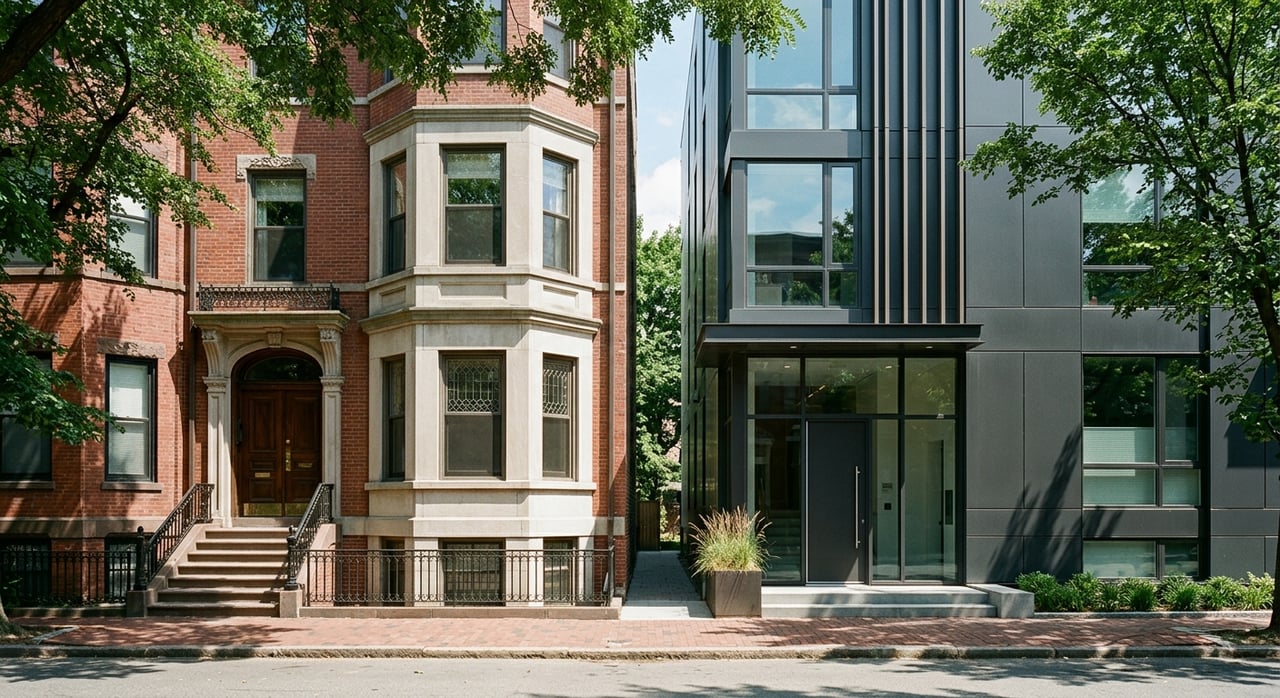
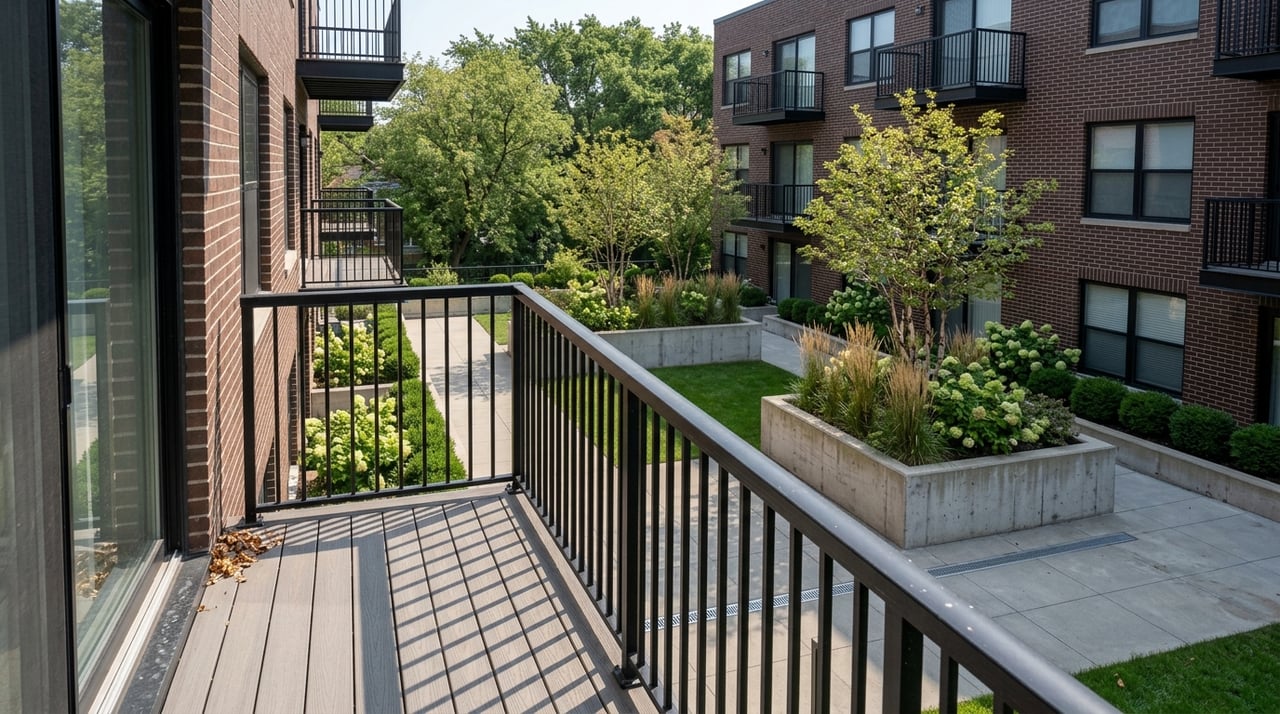
Housing near the station and downtown tends to be more compact and mixed-use. Village planning documents describe the downtown supporting residential district as having smaller lots, smaller homes, apartments, and a pedestrian-friendly character that supports downtown activity.
The 2017 comprehensive plan also describes the Downtown Development district as pedestrian-oriented and supportive of mixed residential and nonresidential uses. The Glen Town Center is framed similarly, with residential, retail, and office uses in a pedestrian-oriented live-work-play format.
A current village project at 1850 Glenview Road continues that trend with a 62-unit mixed-use building that includes ground-floor commercial space and multifamily units above. For buyers or renters who want easier access to the train and a more connected daily routine, these areas may feel like the best match.
Farther-Out Residential Areas
Farther from the station areas, Glenview shifts into a more low-density residential pattern. The village’s 2017 plan describes areas such as Swainwood, Glenayre Park, the Willows, Park Manor, Indian Ridge, Northfield Woods, and Bonnie Glen as single-family neighborhoods with larger setbacks, larger yards, and parcels ranging from about a quarter acre to one acre.
That difference shapes your day-to-day experience. You may gain more privacy, more outdoor space, and a stronger classic suburban feel, but you will usually trade some transit convenience to get it.
The Core Tradeoff
For most buyers and renters, the decision is pretty straightforward:
- Closer to transit usually means more compact housing and more walkability
- Farther from transit usually means more lot size, privacy, and a quieter suburban pattern
Neither option is automatically better. The right choice depends on whether you prioritize an easier train routine, more living space, or a balance of both.
Does Glenview Still Feel Suburban?
Yes, and that is a big part of its appeal. Even with rail access and mixed-use areas, Glenview remains a largely owner-occupied suburban market, with a 78.4% homeownership rate and a median housing value of $499,900 according to the village profile.
You also see that suburban identity in the community’s land use and open space. The village highlights 34 parks and playgrounds across more than 290 acres, while the park district manages 853 acres of parkland and 12.6 miles of walking trails.
The Grove preserves 150 acres of ecologically diverse land, and Historic Wagner Farm remains an active community attraction. These features matter because commuting is only one part of your decision. You are also choosing what your evenings, weekends, and long-term lifestyle will look like.
What Downtown Glenview Feels Like
Downtown Glenview is not one single experience. The village notes that the Waukegan Road side is more auto-oriented, while Glenview Road is smaller in scale and more village-like, with the Metra North Line interrupting the street grid.
That distinction helps explain why some close-in areas feel more walkable and mixed-use, while others still feel shaped by car travel. If you are home shopping with commute convenience in mind, it helps to tour more than one part of downtown so you can compare the feel block by block.
Downtown revitalization efforts have focused on streetscape improvements, outdoor dining, and mixed-use redevelopment. Village planning also supports pedestrian-oriented projects with parking placed at the rear, reinforcing a more walkable pattern in key areas.
Is Glenview a Good Fit for Your Move?
Glenview can be a strong choice if you want a manageable downtown Chicago commute without giving up the benefits of a suburban environment. It works especially well if you value having options, including two Metra stations, meaningful parking supply, access to major roadways, and a range of housing types.
From a home search perspective, the smartest approach is to define your non-negotiables early. Think about your ideal door-to-desk time, whether you want to walk or drive to the train, and how much space you want at home compared with how much daily convenience matters.
When you evaluate Glenview through that lens, the village becomes easier to understand. It is not just “close to Chicago.” It is a market where your exact location can meaningfully change your commute rhythm, housing type, and overall lifestyle.
If you want help comparing Glenview homes through both a lifestyle and commute lens, DeMarcus Hunter can help you evaluate the numbers, narrow your options, and move with a clear plan.
FAQs
How long is the commute from Glenview to downtown Chicago?
- The village says Metra riders should expect about 30 to 35 minutes to Union Station, though your total commute will also depend on station access and your final downtown connection.
Which Metra stations serve Glenview commuters?
- Glenview commuters primarily use two Milwaukee District North line stations: Downtown Glenview at 1116 Depot Street and Glen of North Glenview at 3000 Old Willow Road.
Is parking available at Glenview Metra stations?
- Yes. Downtown Glenview has 721 parking spaces, and Glen of North Glenview has 1,261 parking spaces, with daily and permit arrangements managed through the village.
What kind of homes are near Glenview train access?
- Areas near downtown and the station tend to have more compact, mixed-use housing patterns, including apartments and other transit-oriented residential options.
Do Glenview neighborhoods still offer a suburban feel?
- Yes. Many Glenview residential areas are low-density single-family neighborhoods with larger yards and setbacks, and the village also has extensive parkland and trails.