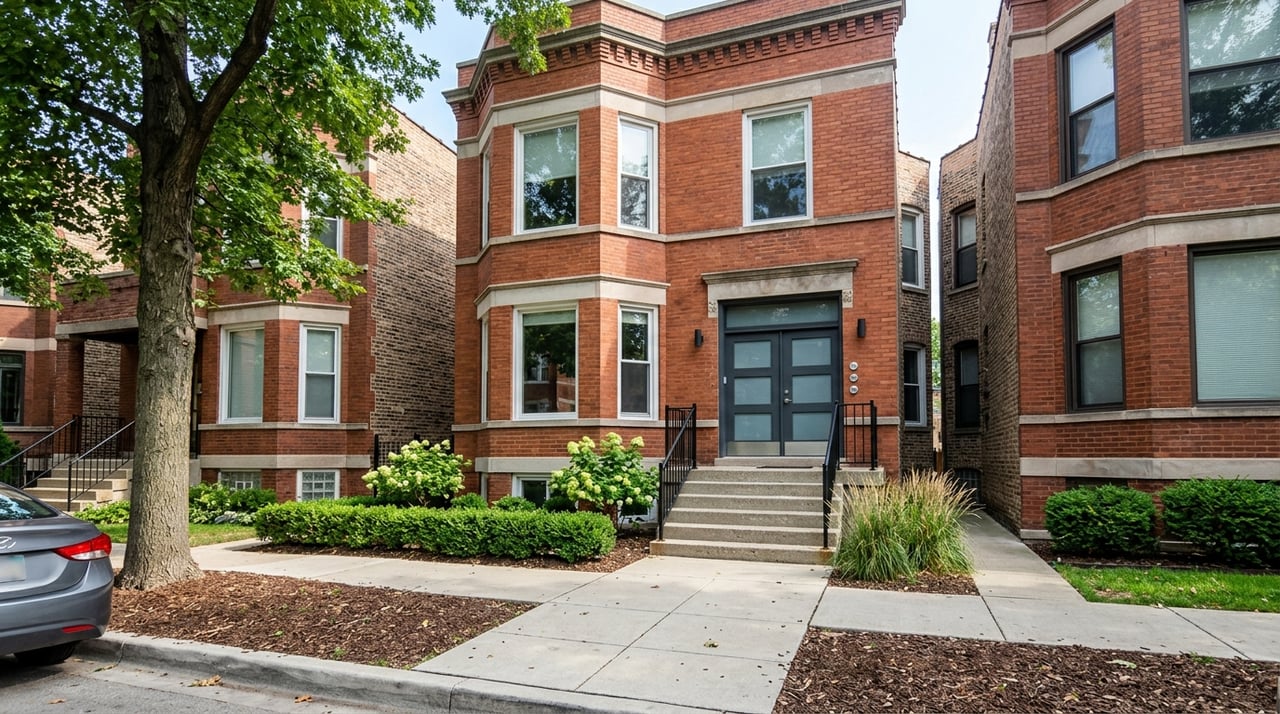
If you want to buy in Chicago without carrying the full housing payment alone, Bronzeville deserves a serious look. This historic South Side area offers the kind of housing stock, renter demand, and transit access that can make owner-occupancy with rental income more realistic. If you are exploring your first purchase or looking for a smarter way to build equity, this guide will help you think through the numbers, the property types, and the risks with a clear plan. Let’s dive in.
Why Bronzeville works for house hacking
Bronzeville stands out because it combines history, location, and a long-standing multifamily housing pattern. WTTW describes Bronzeville as part of Chicago’s Grand Boulevard and Douglas community areas and notes its role as the center of the Black Metropolis from the 1920s to the 1950s. It also benefits from Green Line access at 35th-Bronzeville-IIT, Indiana, 47th, and 51st.
For a house hacker, the biggest advantage is simple: this is already a neighborhood where multifamily living is common. A CMAP Bronzeville planning study found that about 77% of the housing stock was in buildings with three or more units and that about 71% of households were renter-occupied. More current RentCafe data still shows a renter-heavy market, with 68% renter-occupied households.
That renter base matters because house hacking depends on having a realistic tenant pool. It does not guarantee a great deal, but it does mean you are not forcing a strategy into a neighborhood that rarely supports it. In Bronzeville, owner-occupying one unit while renting the others fits the existing housing pattern.
Bronzeville pricing and entry points
Price is another reason Bronzeville gets attention from first-time buyers and owner-occupants. Redfin reports a Bronzeville median sale price of $339,774 for the three months ending April 2026, and Zillow shows a median list price of $334,167 as of April 30, 2026. By comparison, Illinois REALTORS reported a citywide Chicago median sales price of $409,200 in March 2026.
That does not mean every Bronzeville property is affordable or that every block trades the same way. It does suggest that, depending on property type and condition, Bronzeville may offer a lower entry point than the broader Chicago median. For buyers trying to balance monthly costs with long-term upside, that difference can matter.
What properties fit the strategy best
Two-flats and three-flats
For many buyers, two-flats and three-flats are the most practical starting point. The Chicago Architecture Center notes that two- and three-flats make up more than 30% of Chicago’s housing stock, and the city has more than 76,000 two-unit apartment buildings. That means this type of property is not unusual or hard to understand in the Chicago market.
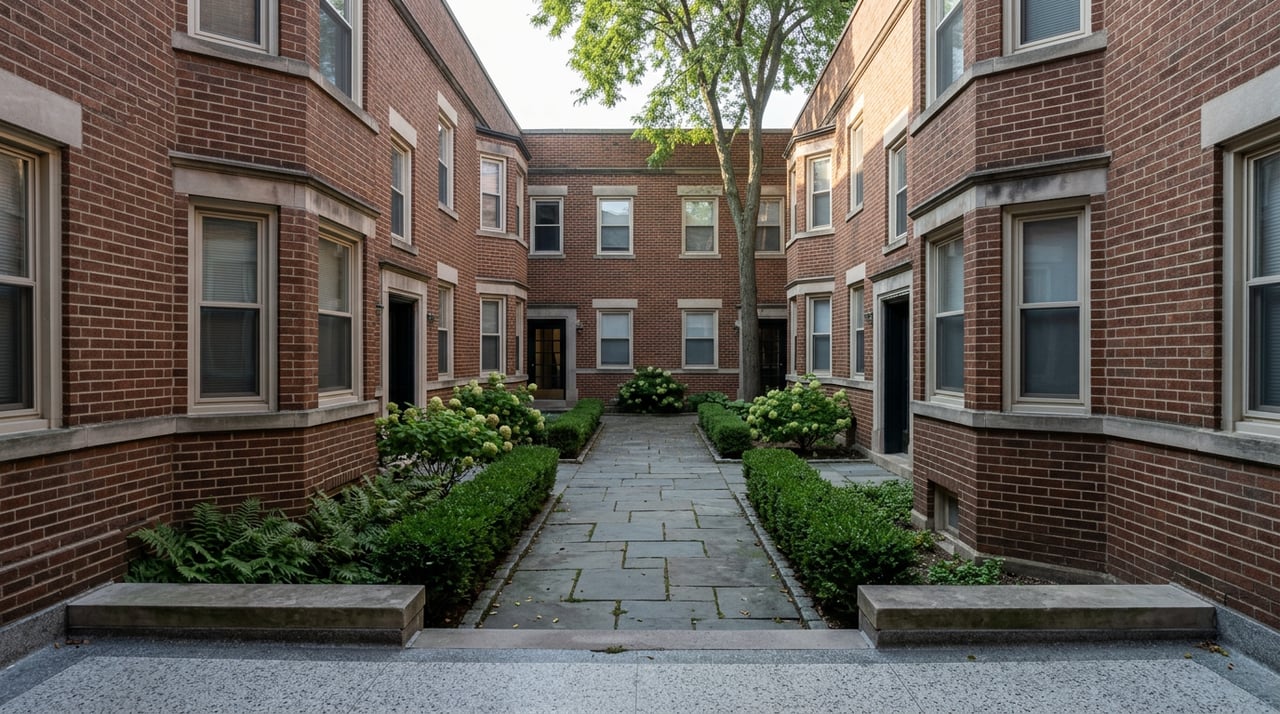
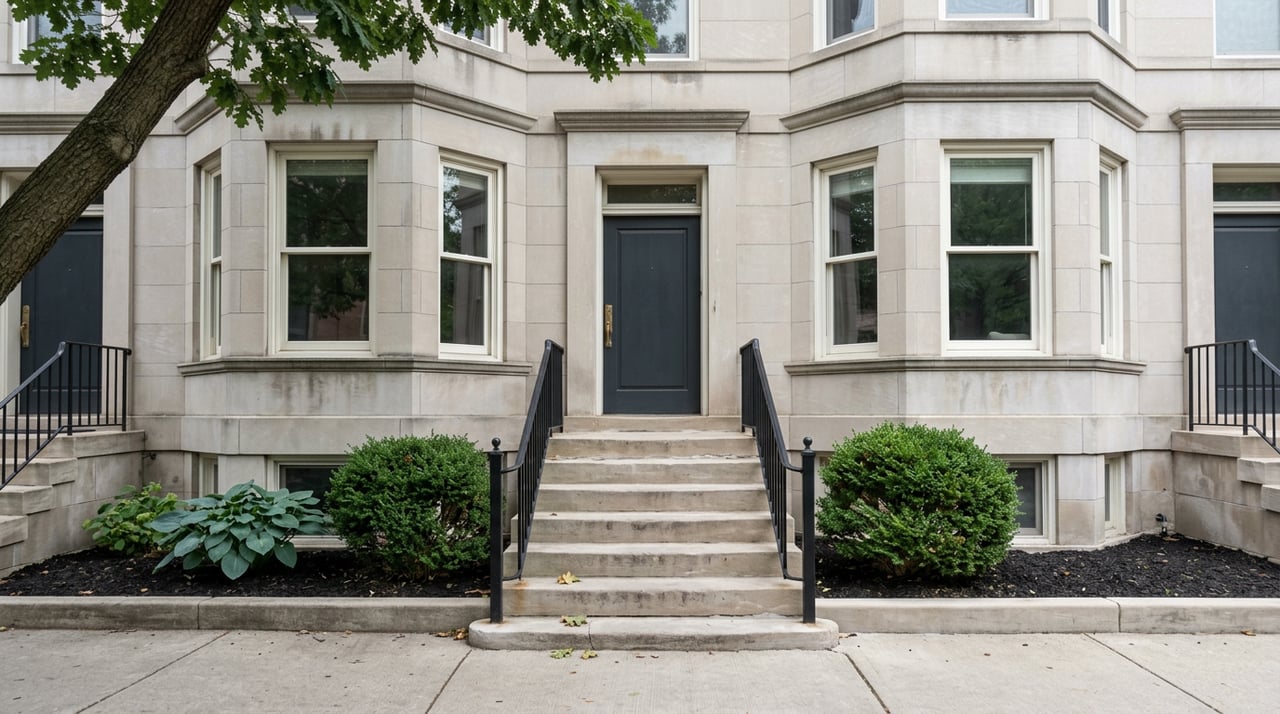
In Bronzeville, that often translates to older masonry buildings with larger rooms and a more traditional layout. These homes can offer solid owner-occupant value, especially if you plan to live in one unit and rent the others. They also tend to be easier to manage than larger buildings if this is your first experience as an on-site owner.
Four-unit properties
A four-flat can work well when the rent math is strong and your reserves are stronger. FHA and conventional financing both allow owner-occupants to buy 1-4 unit properties, which gives buyers room to think beyond a simple single-family or condo purchase. Still, more units usually means more moving parts, more maintenance exposure, and a tighter need for disciplined underwriting.
Older buildings need a different mindset
DePaul’s Institute for Housing Studies reports that the median age of Chicago’s 2-4 unit properties is 108 years. It also notes that nearly 40% of rental units in 2-4 buildings have three or more bedrooms, which can be helpful if you want more flexible unit sizes. In practical terms, many Bronzeville house-hack candidates may offer space and character, but they often come with older systems and more upkeep.
How financing usually works
FHA for owner-occupants
FHA financing remains one of the most accessible paths for buyers entering the market. HUD says FHA loans can be used on 1-4 unit properties, and the down payment can be as low as 3.5%. That can be especially useful if you want to buy a small multifamily home and live in one of the units.
There is an important rule to know for three- and four-unit FHA purchases. HUD states that the property’s net self-sufficiency rental income must be high enough that the property’s PITI does not exceed 100% of that income. HUD also says lenders subtract the greater of the appraiser’s vacancy and maintenance estimate or 25% of fair market rent.
That means you should not count every possible rent dollar when you are planning a purchase. Lenders are already stress-testing the income. You should do the same before you ever write an offer.
Conventional financing and rent offsets
Conventional financing can also work for owner-occupied 2-4 unit properties. Fannie Mae allows rental income to be used for two- to four-unit principal residences and requires lenders to document gross rent through appraisal-based forms for these properties. Fannie Mae also says lenders generally use 75% of gross monthly rent, which accounts for vacancy and ongoing maintenance.
This is why the right question is not, “Can I rent the other units?” The better question is, “After a conservative rent adjustment, does this property still help my monthly budget?” That is the mindset that keeps buyers from overestimating cash flow.
How to run the numbers conservatively
Chicago ownership costs can add up quickly, so your deal analysis needs to be grounded in reality. CMAP reports a median monthly owner cost with a mortgage of $2,295 for Chicago households in 2023. The Cook County Assessor says the homeowner exemption saves an average of about $950 per year.
On the rent side, RentCafe puts Bronzeville’s average rent at $1,592 per month. It reports average rents of $1,302 for a one-bedroom, $1,700 for a two-bedroom, and $1,928 for a three-bedroom. Those are useful market signals, but they are not a substitute for property-specific rent analysis.
A practical way to screen a deal is to estimate market rent, then reduce it using lender-style assumptions. After that, compare the adjusted income against your projected mortgage payment, taxes, insurance, utilities where applicable, repairs, and reserves. If the numbers only work under a best-case scenario, it is probably not the right property.
A simple screening checklist
Before you get emotionally attached to a listing, look at these basics:
- Purchase price versus neighborhood comps
- Number of legal units
- Current or market rent by unit
- Conservative rent after a 25% haircut
- Taxes and possible homeowner exemption impact
- Insurance costs
- Utility setup, including separate meters if applicable
- Immediate repair needs
- Ongoing reserve needs for an older building
This process is where a data-driven approach can save you from an expensive mistake. In Bronzeville, the opportunity is real, but so is the need for disciplined math.
Risks to watch in Bronzeville flats
Legal unit count and layout
Start with legality and livability. In older Bronzeville buildings, buyers should verify the legal unit count, separate utilities, roof condition, masonry condition, and whether the owner’s unit is truly practical for daily living while tenants are on site. A property that looks good online may still have layout or compliance issues that change the deal.
Repair reserves matter
Older small multifamily properties can become expensive fast when maintenance is deferred. DePaul notes that Chicago’s 2-4 unit buildings are often the oldest buildings in their communities, and both HUD USER and DePaul describe small multifamily stock as vulnerable to vacancy, demolition, and conversion pressures. For you, that means purchase price is only one part of affordability.
A thinner down payment plus a thin repair budget can put you in a tough position after closing. If the roof, masonry, or major systems need work, rental income may not feel like relief for very long. A safer plan includes repair reserves from day one.
Historic and landmark considerations
Bronzeville’s historic importance is part of its appeal, but it can also shape renovation choices. The National Park Service says Congress designated the Bronzeville-Black Metropolis National Heritage Area in 2023, and it identifies the Bronzeville Historic District as a Chicago Landmark district designated in 1998. The City of Chicago landmarks page lists possible incentives such as Class L property tax treatment, income tax credits, permit fee waivers, and a state property tax assessment freeze for owner-occupied residential rehabilitation.
Those incentives can be meaningful, but they do not erase the need for planning. If a property falls under landmark or preservation review, renovation options may be narrower and timelines may change. You should budget for code compliance and confirm what improvements are realistic before assuming a value-add plan will be easy.
Is Bronzeville better for buyers or investors?
The best answer is that it can work for both. RentCafe’s renter-heavy data points to ongoing rental demand, while recent sale and list prices remain below the broader Chicago median cited in the research. That creates a market where owner-occupants and small investors may both see opportunity.
For a first-time buyer, the strategic fit is strongest when you want to live in one unit, reduce your monthly cost pressure with rent, and build equity over time. Bronzeville also offers strong transit access and a housing stock that naturally supports small multifamily ownership. If you are comfortable with older-building maintenance and conservative underwriting, it can be a smart path.
How to approach your search
A good Bronzeville house-hack search should be more methodical than a typical home search. You are not just buying a place to live. You are buying a place to live and a small income-producing asset.
That means your search criteria should include:
- Owner-occupant financing fit
- Unit count and legal use
- Building condition and age-related risk
- Realistic rent support
- Transit access and day-to-day livability
- Tax and rehab considerations where historic status may apply
This is where a process-driven advisor can add real value. The goal is not to chase the highest possible rent projection. The goal is to find a property where the numbers, condition, and lifestyle fit all line up.
If you are considering house hacking in Bronzeville, the opportunity is real, but the smartest path is a disciplined one. With the right property, a conservative financing plan, and a clear understanding of building condition, owner-occupancy can become a practical way to lower housing costs and build long-term equity in one of Chicago’s most historically significant neighborhoods. If you want a data-backed strategy for evaluating Bronzeville flats and small multifamily opportunities, DeMarcus Hunter can help you move forward with clarity.
FAQs
What is house hacking in Bronzeville Chicago?
- House hacking in Bronzeville usually means buying a 2-4 unit property, living in one unit, and renting the other unit or units to help offset your housing costs.
What Bronzeville property types work best for owner-occupants?
- Two-flats and three-flats are often the easiest starting point for owner-occupants because they are common in Chicago, easier to manage than larger buildings, and often fit first-time buyer goals well.
What rent should you count on a Bronzeville house-hack deal?
- A conservative approach is best. Fannie Mae guidance commonly uses 75% of gross monthly rent for qualifying in many scenarios, which helps account for vacancy and maintenance.
Can you use FHA financing for a Bronzeville multifamily home?
- Yes. HUD says FHA loans can be used for 1-4 unit properties when you occupy the property as your primary residence, and the down payment can be as low as 3.5%.
What risks matter most when buying a Bronzeville two-flat or three-flat?
- The biggest risks usually include verifying legal unit count, understanding the condition of older systems and masonry, confirming realistic rents, and keeping enough cash reserves for repairs and vacancies.
Are Bronzeville home prices lower than Chicago overall?
- Recent research in this report suggests Bronzeville sale and list prices are below the broader Chicago median, though the exact gap depends on the property type, condition, and location within the neighborhood.